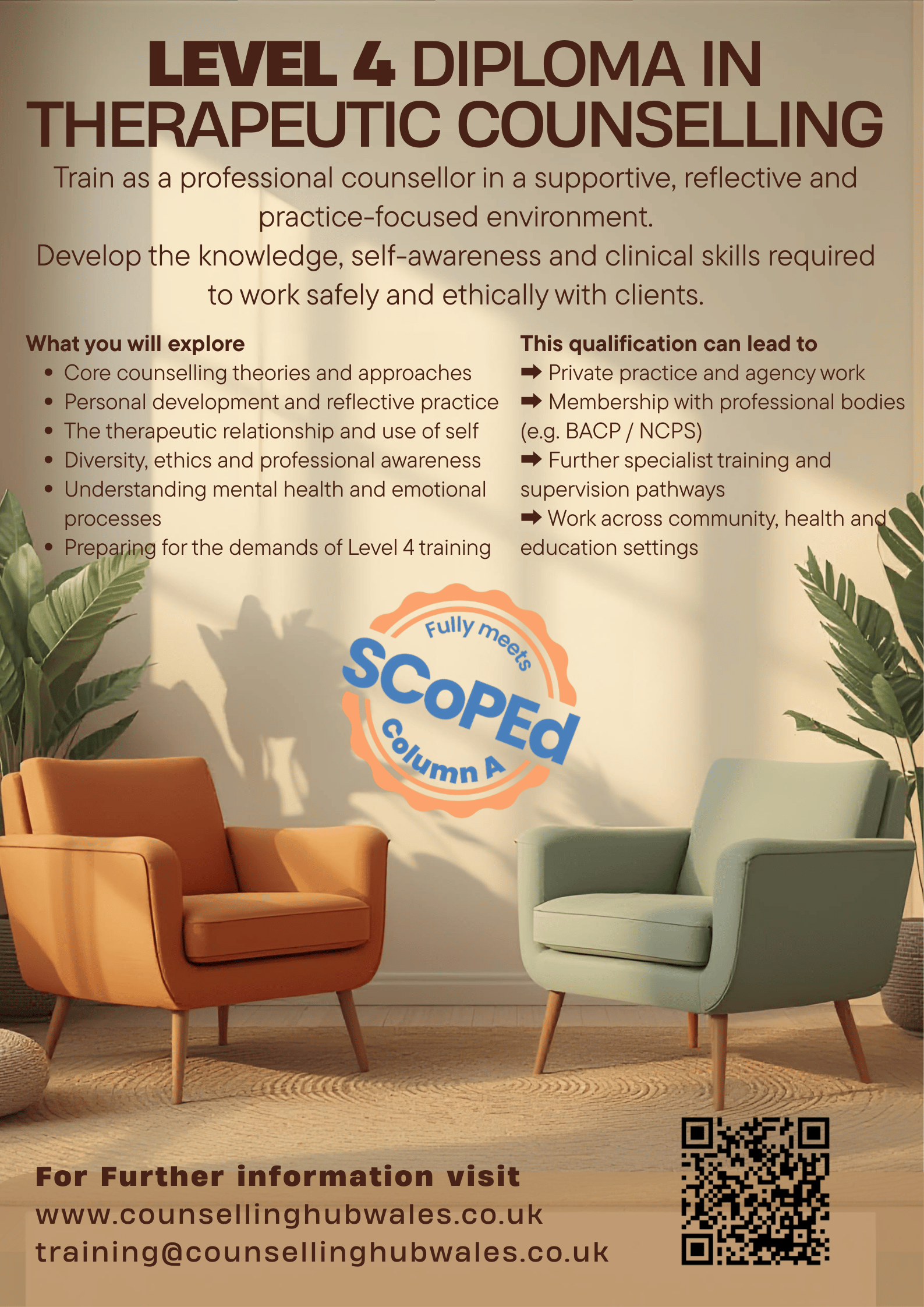
Level 4 Diploma in Therapeutic Counselling (BACP Approved)
Course Details
New Intake runs every September
Start Date 1st Saturday of September
Duration 2 years (30 Saturdays per year)
Day Saturdays
Time Between 8am and 3.30pm
Location In Person - Talbot Green, CF72 8AF
Cost £2200 per year
Plus Registration Fee £495 (CPCAB fee Includes VAT)
Deposit £500
Payment Plans Available Yes
Additional Costs and Commitment Books, Personal Therapy and possible Placement Cost - Indemity Insurance, Professional Membership Body, DBS and ICO membership.
Budget around £3000 per year (depending on how many books you want to buy).
Course Overview
The Level 4 Diploma in Therapeutic Counselling is a professional training course designed for learners who are ready to develop the skills, knowledge and self-awareness needed to work safely and ethically as a counsellor.
The course combines experiential learning, counselling theory, skills practice and personal reflection to support the development of a strong therapeutic presence and professional identity. Learners also complete supervised client work within a counselling placement, allowing them to apply learning in real practice while receiving ongoing support.
This qualification prepares learners for work within counselling agencies, community settings and private practice, and can support progression towards professional membership with recognised counselling organisations.
(Prices are subject to change)
Why take the Level?
Choosing to train as a counsellor is both a professional decision and a deeply personal journey.
The Level 4 Diploma supports learners in developing the knowledge, confidence and self-awareness required to work therapeutically with others in a safe, ethical and compassionate way.
You may choose this course if you
Feel ready to move beyond learning about counselling into practising it
Want to develop a strong therapeutic presence and professional identity
Are committed to deepening self-awareness and emotional understanding
Wish to gain real client experience within a supported placement
Are working towards agency work, private practice or counselling roles
Are seeking a recognised pathway towards professional membership
This stage of training often represents a meaningful shift — where skills, reflection and experience begin to integrate, allowing learners to feel more grounded, capable and prepared for professional practice.
Alongside skill development, the course also supports personal growth, resilience and reflective capacity, helping you become a practitioner who can hold others with empathy, awareness and ethical responsibility.
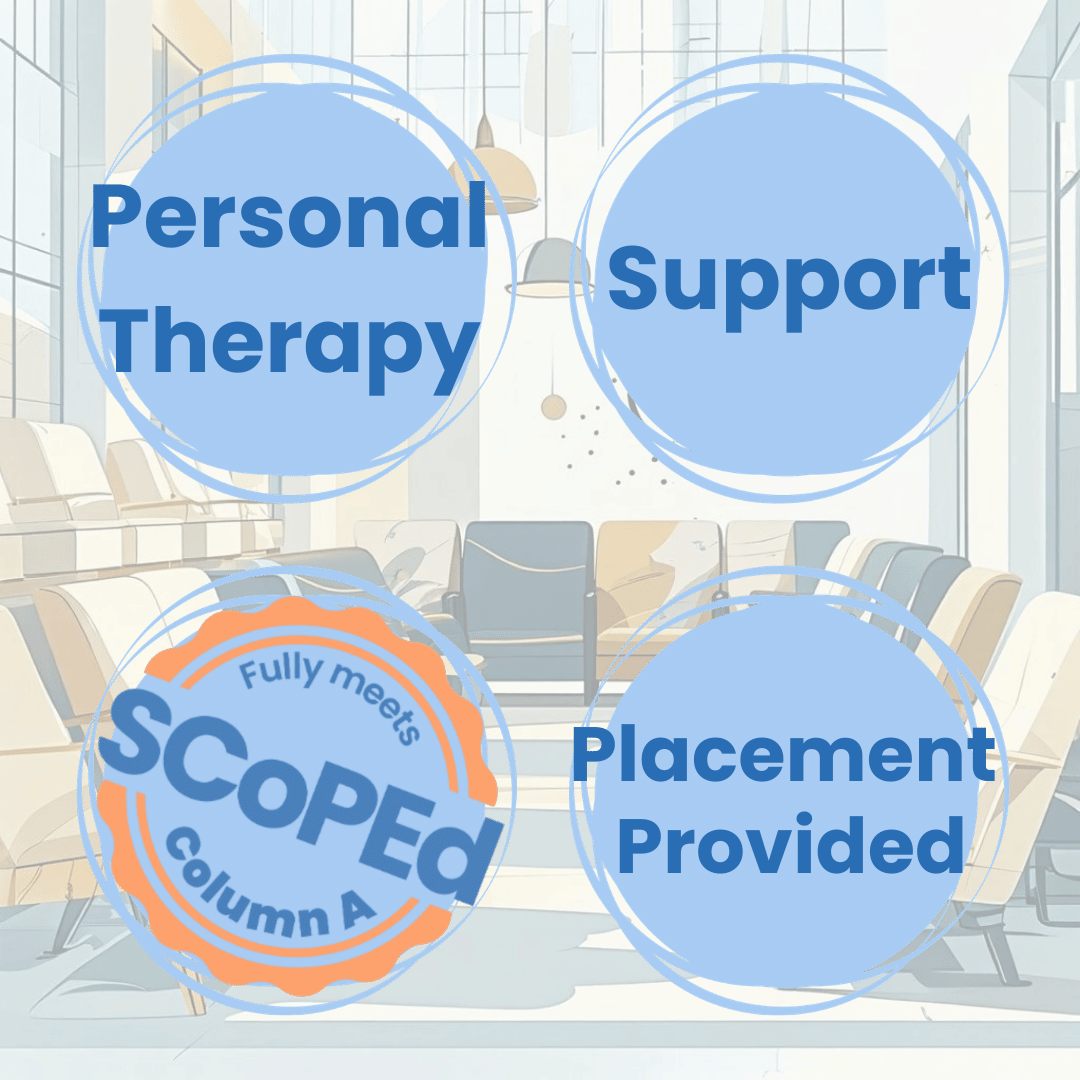
What you will learn!
Throughout the course you will develop
-Advanced counselling skills and therapeutic presence
-A deeper understanding of counselling theories and approaches
-The ability to form and maintain therapeutic relationships
-Ethical decision-making and professional responsibility
-Client assessment, safeguarding and risk awareness
-Reflective practice and use of supervision
-Confidence in working with real clients
The course places strong emphasis on self-awareness, emotional resilience and safe practice.
-
This qualification is designed to equip learners with the advanced knowledge, therapeutic skills, and professional competencies required to work safely and ethically as practising counsellors.
Through a combination of experiential learning, skills development, theoretical exploration and reflective practice, learners deepen their understanding of the therapeutic relationship, use of self, ethical decision-making and professional responsibility. The course supports the development of clinical confidence, emotional awareness and the ability to work with a range of client experiences within a supervised counselling placement.
Whether progressing into agency work, community settings or private practice, the diploma prepares learners to form effective therapeutic relationships, work within recognised ethical frameworks and support clients with sensitivity, awareness and professional integrity.
-
This qualification is for individuals who are:
Committed to becoming practising counsellors.
Designed for learners who have completed prior counselling training and are ready to progress into professional therapeutic practice. The course supports the development of advanced counselling skills, ethical awareness and clinical confidence, preparing learners to work with clients within supervised placement settings and move towards professional membership.
Ready to develop a strong professional identity and therapeutic presence.
Ideal for individuals who wish to deepen their self-awareness, emotional resilience and understanding of the therapeutic relationship. The diploma supports learners in integrating theory, skills and reflective practice, helping them grow into practitioners who can work safely, ethically and with confidence.
Seeking progression into counselling roles, agency work or private practice.
Suitable for learners aiming to work within community services, charities, education, healthcare settings or independent practice. The course provides the knowledge, placement experience and professional grounding required to begin practising within recognised ethical frameworks and organisational contexts.
-
To apply for this qualification, you will need a readiness to engage in deeper personal and professional development, alongside a commitment to ethical and reflective practice.
Applicants are typically required to have completed Level 3 Counselling Studies (or an equivalent qualification), as well as demonstrate emotional readiness, the capacity for self-reflection and an openness to receiving feedback within a supportive learning environment.
As this course involves working with clients in placement, learners should also be willing to take responsibility for their learning, engage in supervision and commit to the personal growth that therapeutic training naturally invites.
A genuine motivation to become a practising counsellor, alongside the ability to participate respectfully and thoughtfully within a reflective group setting, will support a successful application and learning experience.
-
Alongside taught sessions, learners will be expected to engage in a number of activities that support their development as safe and reflective practitioners.
These typically include:
Counselling placement
Learners will secure and attend a suitable counselling placement where they can complete supervised client hours. This provides essential real-world experience and supports the integration of skills, theory and professional identity.
Clinical supervision
While working with clients, learners will attend regular supervision with a qualified supervisor to reflect on practice, ensure ethical working and support professional development.
Personal therapy (where appropriate or recommended)
Many learners choose to engage in personal therapy during training to deepen self-awareness, explore personal process and enhance their capacity to work therapeutically with others.
Independent study and reflective learning
This includes reading, written coursework, reflective journaling, skills practice and preparation for assessments. Independent learning helps deepen theoretical understanding and supports integration of experience.
Skills practice outside of sessions
Learners are encouraged to practise counselling skills with peers between sessions to build confidence, develop therapeutic presence and prepare for assessed skills work.
Personal and professional reflection
Ongoing reflection on learning, emotional responses and development is an important part of training and supports readiness for safe and ethical practice.
-
Upon successful completion of this qualification, learners are prepared to begin working as practising counsellors within appropriate settings, supported by supervision and guided by recognised ethical frameworks. The diploma represents a significant step into professional practice, allowing learners to apply their skills, knowledge and self-awareness with real clients.
Many graduates progress into counselling roles within community organisations, charities, educational settings, healthcare environments and private practice, depending on their individual interests and opportunities. The course also supports progression towards membership with professional bodies such as BACP or NCPS, helping learners continue their professional development and establish their counselling identity.
For those wishing to continue learning, this qualification can lead to specialist training, ongoing CPD, supervision training, or the exploration of particular client groups and therapeutic approaches. Others may integrate their counselling qualification alongside existing careers in helping professions, strengthening their relational work, emotional awareness and professional confidence.
This qualification opens a wide range of pathways — enabling learners to move into professional counselling practice, deepen their contribution within helping roles, or continue developing through further therapeutic and personal growth opportunities.
This qualification has been assessed and approved by CPCAB to met the standards expected for level of training for Counselling and Psychotherapy.